

President Ferdinand R. Marcos Jr. has emphasized the importance of building strong, evidence-based cases against individuals involved in alleged irregularities in flood control projects, warning that filing weak cases could undermine the government’s anti-corruption efforts.
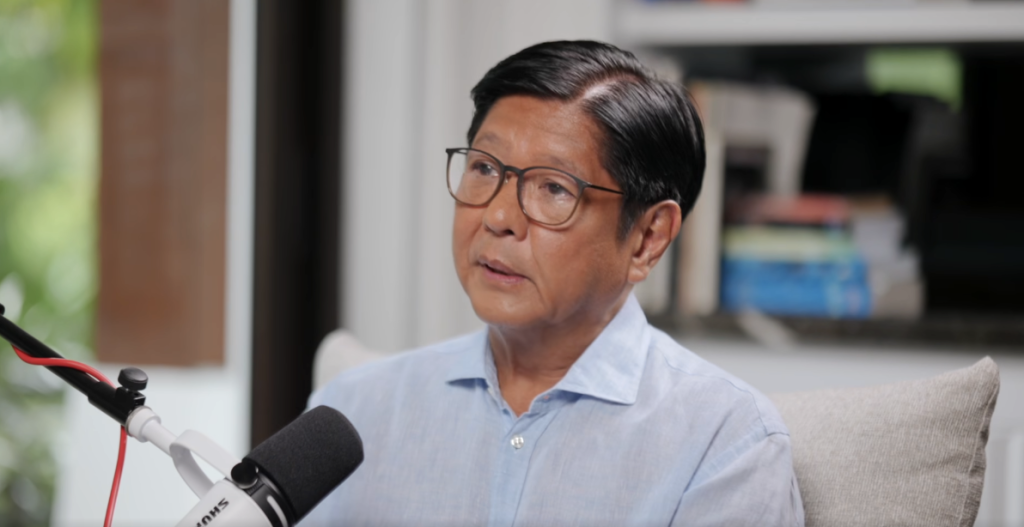
“Look, what happens if we rush? If our evidence is incomplete or unclear, and we still push through, we’ll lose the case. Can you imagine? That would be much, much worse,” Marcos said in a teaser video released Sunday for the latest episode of The BBM Podcast.
The President stressed that while many of those implicated in questionable projects may indeed be guilty, the government must ensure airtight cases before bringing them to court.
“We know many of these people are not innocent, but if you’re going to bring them to court, you must have a very strong case,” he said.
Marcos cautioned that prematurely filed cases with insufficient evidence could be dismissed, potentially emboldening violators and weakening public trust in the government’s campaign against corruption.
He underscored that all government actions must adhere strictly to the rule of law. “We have to follow the law. Otherwise, whatever we do is not legitimate. And we have to be very, very clear that we go after the guilty ones,” the President said.
On September 11, Marcos created the Independent Commission for Infrastructure (ICI) to investigate suspected anomalous projects under the Department of Public Works and Highways (DPWH) in various parts of the country.
The commission’s formation follows the President’s renewed call for transparency and accountability in public infrastructure spending, particularly in flood control initiatives.
During his fourth State of the Nation Address (SONA) on July 28, Marcos publicly condemned those behind irregular flood control projects, saying, “Mahiya naman kayo sa inyong kapwa Pilipino.”
To bolster public participation in oversight, the President also launched the Sumbong sa Pangulo website, which allows citizens to directly report substandard or non-existent infrastructure projects in their communities.